
The Sensory-Sensitive Guide to Unwinding After Work (Without Alcohol or Screens)
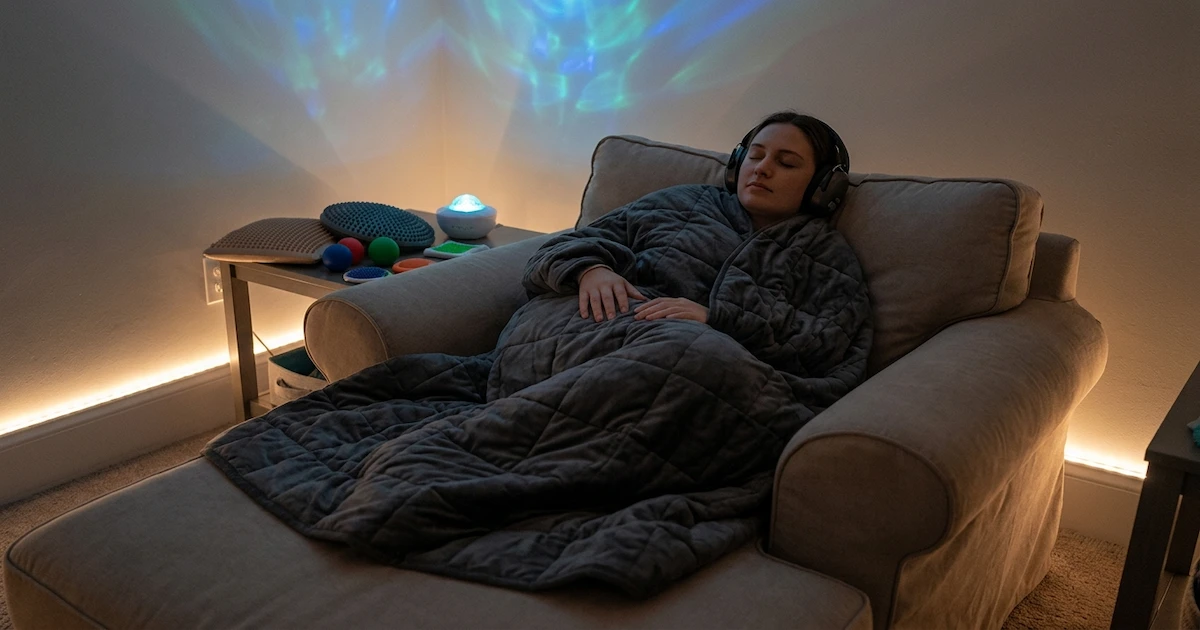
The default evening ritual for most people is simple: pour a glass of wine, collapse onto the couch, and disappear into a screen. For some, this works well enough. For others—particularly those whose nervous systems process sensory input differently—this standard formula can leave you feeling more depleted than when you started.
If you've ever finished a workday feeling like every sound, light, and demand has been sandpapered against your nerves, the issue isn't that you're "bad at relaxing." It's that your nervous system may need something different than what mainstream unwind culture offers. Occupational therapy research increasingly recognizes that sensory approaches are key to adult mental health, yet most resources still focus on children.
This guide explores practical, sensory-based alternatives to the wine-and-Netflix default—strategies that work with your nervous system rather than against it.
Why the Standard Unwind Doesn't Always Work
The "reward" model of decompression—alcohol, passive screens, snacks—often makes stress worse rather than better. One researcher who studies recovery tactics for highly stressed people found that most of what we do to reward ourselves after work actually leaves us more depleted. The alternative isn't just "unwinding"—it's active recovery through intentional sensory input.
For sensory-sensitive people, this distinction matters. Your nervous system may be either overstimulated (flooded by the day's input) or understimulated (craving grounding sensation). The solution isn't to numb out, but to give your body the specific sensory experiences that restore regulation.
Weighted Blankets: Deep Pressure for Nervous System Reset
Weighted blankets have moved from niche therapeutic tools to mainstream wellness products, but the science behind them is more nuanced than marketing suggests. They work through deep pressure stimulation—a gentle, even pressure across the body that mimics the sensation of being held.
The mechanism is thought to activate the parasympathetic nervous system, which governs rest and recovery. Some research suggests this pressure may encourage serotonin release while lowering cortisol, the stress hormone.
What the evidence shows for adults:
- A 2024 study found adults with insomnia who used weighted blankets reported significantly better sleep quality, with improvements in daytime sleepiness, stress, and anxiety
- Another randomized study found reduced insomnia severity in adults with conditions including depression, ADHD, and generalized anxiety disorder
- A 2024 review concluded there is more evidence supporting overnight use in adults compared to children
Practical guidance: Experts recommend choosing a blanket around 10% of your body weight. Use it during your evening wind-down—reading, listening to audio, or simply lying still—rather than only at bedtime. This gives your nervous system a concentrated dose of grounding pressure when it needs it most.
Safety note: Weighted blankets aren't suitable for everyone. Avoid them if you have respiratory issues, sleep apnea, poor circulation, or claustrophobia. Never use them for infants.
Audio Environments: Sound as Sensory Regulation
For many sensory-sensitive people, the auditory landscape of a workday—meetings, notifications, background chatter—accumulates into a kind of neural static. Screens often compound this with their own audio demands. The alternative isn't silence (which can feel jarring after hours of input) but intentional sound.
Passive noise reduction: For some, the solution is simply blocking out the world. Noise-reduction earmuffs designed for sensory sensitivities passively dampen external sound without playing any audio. Unlike active noise cancellation, which can create a pressurized feeling some find uncomfortable, passive muffs provide a simpler reduction in decibel level. They're particularly useful during the transition period immediately after work, when the contrast between office noise and home quiet can feel disorienting.
Therapeutic listening: High-quality headphones can transform music from background noise into a genuine regulation tool. One reviewer described a listening session as "destressing and therapeutic," noting that the right headphones allow music to "embalm you" rather than simply play. The goal isn't entertainment but absorption—letting sound become a full sensory environment that gently occupies your nervous system.
Practical approach: Create a "transition playlist" of instrumental or ambient music that requires no cognitive engagement. Listen with eyes closed for 10-15 minutes. This gives your auditory system something predictable and pleasant to process, rather than the chaotic residue of the workday.
Temperature Shifts: Cooling and Warming for Regulation
Temperature is one of the most powerful—and most overlooked—levers for nervous system regulation. Your core body temperature follows a circadian rhythm, and manipulating it deliberately can shift you from stress mode into rest mode.
The cooling principle: To initiate sleep, your core temperature needs to drop by about 1-3 degrees Fahrenheit. Cooling your body—especially the palms of your hands, bottoms of your feet, and upper face—releases heat and signals to your brain that it's safe to shut down.
Cold foot baths: A randomized controlled trial found that cold foot baths combined with lavender inhalation enhanced parasympathetic activity and improved autonomic variability—a key indicator of nervous system health and adaptability. The study supports these as effective, non-invasive methods for relaxation and stress relief.
The hot-then-cool effect: Counterintuitively, a hot bath or shower about an hour before bed can help you sleep faster. The heat dilates blood vessels, pushing blood to the surface. When you step into a cooler room, that heat dissipates rapidly, causing your core temperature to drop and triggering sleepiness.
A sensory ritual to try: The "shower orange" phenomenon—eating an orange in a hot shower—has gained traction in neurodivergent communities precisely because it reorganizes the sensory hierarchy. It delivers heat, scent, and tactile engagement in a controlled, predictable way, interrupting runaway anxiety without demanding executive function. The principle applies more broadly: pairing a temperature shift with a simple, pleasurable sensory input can create a pocket of coherence for an overloaded nervous system.
Putting It Together: A Sensory-Sensitive Evening Framework
You don't need to do all of these things every night. The goal is to build a small repertoire of sensory tools you can draw from based on what your nervous system needs on a given day.
After work, before dinner:
- If overstimulated: Passive noise-reduction earmuffs or a quiet room with soft lighting. Dim the lights. Reduce visual clutter.
- If understimulated or agitated: Cold water on your hands and face, or a brief cold foot bath. The temperature shock can reset a spiraling nervous system.
Evening wind-down:
- Weighted blanket + audio: Lie under a weighted blanket with instrumental music or ambient sound. This combines deep pressure with predictable auditory input—two channels of regulation working together.
- Temperature ritual: A hot shower or bath, followed by a cool room. The contrast does the work.
- Simple tactile engagement: Holding a warm mug of herbal tea, kneading therapy dough, or even the shower orange ritual. Low-demand, high-sensory activities that ground you in the present moment.
Before bed:
- Keep the room cool (around 65°F/18°C is often recommended).
- If your feet get cold, stick them out from under the covers—the glabrous skin on your feet is an efficient heat-release surface that can help lower core temperature.
The Bottom Line
Unwinding after work doesn't have to mean numbing out. For sensory-sensitive people, the most effective decompression is often active sensory regulation—deliberately giving your nervous system the specific inputs it needs to shift from survival mode into rest mode.
Weighted blankets, intentional audio environments, and temperature shifts are practical, evidence-informed tools that don't require alcohol or screens. They work because they speak your nervous system's language.
Start with one. Notice how your body responds. Adjust as needed. The goal isn't a perfect routine—it's a kinder relationship with your own sensory needs.